Showing posts with label Guadalajara. Show all posts

Friday, January 17, 2014

Cochon: imaginative cuisine in unpretentious yet stylish ambience

When someone mentions French food, we tend to think of a fancy place with a sophisticated atmosphere that requires gentlemen to wear a jacket and, of course, has high-prices. None of these clichés are true when it comes to Cochon, a nice joint with a specialty that comes full of possibilities: the Planchette.

Well-located in Colonia Americana—walking distance from Avenida Chapultepec and the U.S. Consulate—Cochon is headed by Tapatio chef Diego Quirarte. Educated in finance and gastronomy, Quirarte has a passion for good food and wine. The simple but hip black-and-white decor includes some innovative recycling ideas with main courses served on rustic ceramic tiles as plates.

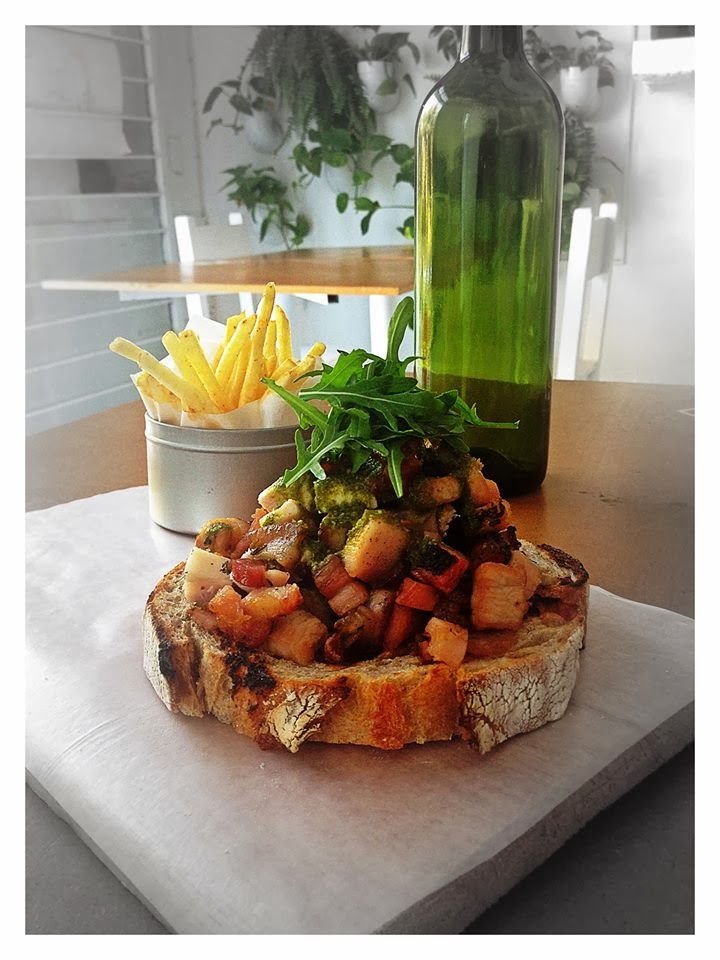
After a few years working for respected chefs in Guadalajara, Quirarte started his own venture, an unpretentious yet stylish restaurant with a unique multi-faceted product. Quirarte describes his Planchette as a “big tapa”: a thick slice of artisan bread providing the base for several layers of flavor. The idea of the dish evokes the concept of deconstructed food, breaking down a dish down to its core elements and presenting them in a new form. Thus changing the eating experience while preserving the flavors and textures.

In this way, Quirarte presents a full meal over a bread base. Take, for example, their veggie selection—the Portobello Planchette—served with marinated, grilled mushrooms, mozzarella cheese, roasted peppers and sun-dried tomatoes then covered with an organic salad and pesto.

The house specialty is the Cochon (that’s French for pig) Planchette, a delicacy of slow-roasted pork slices marinated in fine herbs and topped with a bacon marmalade, Dijon mustard and mizuna, or Japanese greens. Other approaches include the Atun Fresco Planchette, a thick tuna steak grilled with a crust of sesame and a garlic and chili twist, topped with mashed yams and coriander foam. The Lamb Arrachera choice comes with cardamom and mint mayonnaise, chimichurri (Argentinian pesto), a chipotle sauce and mizuna. There’s also the barbecued octopus with rustic mashed potatoes and organic salad.

To complete the experience, Cochon offers a variety of entrées and salads with the same imaginative vision, such as the Tartar Tuna Ceviche (68 pesos) with green apples; ukoy (a Filipino garlic sauce) and greens; or the De Verano Salad (64 pesos), an assortment of organic greens with pears, peaches, brie cheese, candlenuts and a delicious vinaigrette.

They also have an ample selection of Mexican artisan beers and a good variety of Mexican and international wines.

House-made dessert choices include butterfat ice cream with chocolate powder and a red-berry compote (32 pesos); and a superb mascarpone cheesecake topped with strawberry ginger compote and peanut praline (37 pesos).
https://www.facebook.com/CochonMx
Cochon Gastrobar
General Coronado 5, Colonia Americana, 
Guadalajara, (33) 3825-2864.  Cash only

Friday, November 1, 2013

Le Bistro keeps European flavors true to form


Cedric Defayes got out of banking business in 2009 and returned to Guadalajara to eventually open a bistro with friends he made 10 years before during a stint here as a student.  The steely blued-eyed native of the Alps region of Switzerland serves up European cuisine in his Le Bistro, Le Cava & Le Jardin, just half a block off Avenida Chapultepec.

Le Bistro’s menu is a mixture of French, German, Italian and Spanish recipes, many culled from his childhood cooking with his great aunt and mother, others from Swiss friends with whom he met frequently to cook and drink wine.

Fondues are a house speciality and the base is a mixture of gouda, gruyere and cream cheeses. One variety is tomato centric, others include one loaded with basil pesto, another with mushrooms,  and one with curry, garlic and cumin. A best seller is the fondue with a mixture of gruyere, brie and blue cheeses.

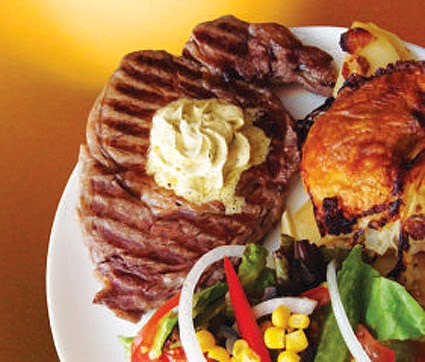
Menu options include vegetarian or meat lasagna, quiche Loraine, spinach quiche, rib eye topped with Cafe de Paris butter (anchovies, spices, curry and garlic) and au gratin potatoes and a plate of tapas-like small flakey pastry served with brie, smoked salmon, serano ham. Daily specials on the board the day we went included  a German-style pork shank or saurkraut with white veal sausage. Other sausages include Polish, schübling and wiener.

Defayes declines to Mexicanize his food and doesn’t serve any chile unless it is asked for. His one deviation from this is a delicious pan de elote dessert. All the desserts are made in house, although the croissants and bread are purchased from a bakery that is up to European standards and tastes. Those with a sweet tooth can enjoy carmelized apple pie, chocolate volcano cake and coconut paradise among other options with a rich, dark Chiapas coffee.

Defayes has a decent wine cellar with more than 30 vintages from around Europe, South America and Mexico. He personally likes Cabernet from Santo Tomas, Baja California’s oldest winery. He also carries a variety of Mexican craft beers and considers many of the Wiess (wheat) brews made here as superior to those found in Germany. During the colder months Glühwein, a spiced hot wine with a cabernet base is available. Monday to Thursday a 3 x 2 offer on almost all beverages is in force from 5 to 9 p.m.

Once a month, Le Bistro hosts guest chefs to cook up special dishes from a specific European Country. Russia’s cuisine will be featured November 12 and 13. A four course meal will be enhanced by traditional and modern Russian music. Special dishes will be offered during the yuletide season and they can host your Christmas party or Posada there as well.

The restaurant has three different areas to choose from: the main Bistro with a view of bustling Avenida Lopez Cotilla, a patio with lots of greenery called El Jardin, and La Cava which is where many couples enjoy a romantic dinner. Hours are Monday to Friday, 5:30 p.m. to midnight and Saturday 1:30 p.m. to 1 a.m. Sunday a brunch is served from 11 a.m. to 2 p.m. for only 79 pesos including one coffee.


Lopez Cotilla 1480, Tel. 3615-1800, e-mail: lebistrogdl@hotmail.com 

Thursday, October 17, 2013

Chez Chouchou: Revisiting the French Connection


Guadalajara’s trendy Colonia Americana is home to an excellent but inexpensive French restaurant, which we visited again recently, some 6 months after our last review. A collaborative venture between three Mexicans and a Frenchman with contrasting but complementary backgrounds, Chez Chouchou, opened last December, serves a range of gourmet meals, fine French wines and creative and original cocktails.

“Our main goal is to bring a different concept of French cuisine. When you think of French cuisine you automatically think ‘It’s expensive,’ but you can eat here without spending a lot,” says Jonathan Patiño, one of the restaurant’s four founders.

Duck tamale with avocado sauce

Parisian Antoine Pluchet designed the interior of Chez Chouchou opting for a vintage boutique style, reinforcing the inexpensive vibe with home-made adornments and unpretentious paper place mats.
“We wanted a place where you can chill and have a good time,” Patiño says. “If you’re not that hungry you can have a glass of a good wine and if you are hungry then you can enjoy what we have to offer.”

Tuna in red wine
There is plenty to enjoy. The starters include a wonderful French onion soup, goats’ cheese empanadas, mushroom crepes, asparagus with Serrano ham and parmesan, and pear salad with spinach and caramelized nuts. Two new appetizers include a cheese plate with imported brie and camembert and duck confit panuchos (similar to what Jalisco denizens call sopes, but thinner).
It gets even better, with the main courses including salmon, duck a l’orange, ratatouille with rice, a gourmet hamburger, cheese and eggplant ravioli, chicken and mushroom casserole, and Seared Tuna steak with alioli sauce among other items.

The duck a l’orange has proven the most popular dish, Patiño says. “We make the sauce a little bit different,” he explains. “This is French-Mexican cuisine, not your common French cuisine. We add chile morita to give it that little touch of extra flavor.”
Asparagus au gratin with spanish serrano ham
We tried the fresh steamed mussels (a baker's dozen of local or Chilean mollusks) served with white wine, butter and melted brie cheese, served with perfect hand cut French fried potatoes, and had no complaints.

Another favorite for two is the Raclette, a cheese from the Alps served in an electric fondue machine and accompanied by Serrano and turkey ham, cooked potatoes and vegetables and their excellent bread. The bread, acquired from Guadalajara French bakery Ohlala, deserves mention. It is nothing like the Mexican French-style bread, you find in most corner shops. It has a firmer crust, with little air pockets throughout and goes wonderfully with the imported cheeses here.

For dessert, Patiño recommends the “perfect” profiteroles, although this writer can attest to the quality of the creme brulée flambeed with tequila. Sweet crepes are also available. Two newer options include tarta tartin, a caramelized apple tart from Normandy, and canelé, a sweet bread with lots of cinnamon and butter from Bordeaux. Both are served with vanilla ice cream. Their fine coffee is a three-way blend from Chiapas, Oaxaca and Veracruz.
Choux á la crême pâtissiere
Patiño is proud of the wine list, with bottles ranging from 240 to 590 pesos. The house Merlot, which costs 60 pesos for a glass or 210 pesos for a bottle, is excellent. As Patiño says, “usually house wines are pretty dull but this one has lots of flavor and aroma.” According to partner Raul Rivas Ramos their best (though not most expensive) wine is Pomerol, a vintage from Bordeaux's Chateau la Renaissance. It goes well with the duck, other meat entrees and cheeses. Other options include wines from France, Spain, Australia, Mexico and California.

With studies in mixology from the London Shaker bar school, Patiño has devised a range of intriguing cocktails, including the Spring Paris, a mix of white and red vermouth infused with rosemary and grapefruit and mandarin soda, and the Mango Chouchou, a blend of sparkling wine, mango extract, cucumber, cranberry and ginger. A new option here is Strawberry Chou, liquor de cassis with a French sparkling beverage called “Monin” in strawberry flavor.

“I’m very creative in what I do,” Patiño says, explaining that he aims to bring “incredible mixology” to Guadalajara, a city largely bereft of quality cocktail bars. Bottled beer from Modelo and Minerva brewery are also available.

To keep things fresh, the staff are always modifying the menu and introducing new dishes, including the daily special, served from 2 p.m. to 4 p.m., including a starter, main course and coffee for 95 pesos,. The quality of the special is sure to bring customers back to explore what else is on offer.

The service when we ate there was prompt but not effusive, the music: low volume jazz and European big band and seating options included hard backed chairs and a cushioned sofa-like booth with pillows. They now offer a menu in English and a few of the servers speak some English.

This restaurant is not trying to impress you, but make you feel at home. This is not a fast food restaurant; the dishes are all prepared from scratch when you order them. All the ingredients are brought in daily and may run out. 

Prices of starters run from 49 to 120 pesos and main courses from 60 to 175 pesos. Chez Chouchou has seen an uptick in expat dinners from the U.S. consulate and lakeside visitors on day shopping trips. Their TripAdvisor rating is 6 out of 386 restaurants in Guadalajara and many of the positive comments were in French. 

 Facebook

Pedro Moreno 1290 in Guadalajara’s Colonia Americana. 
Open Tuesday to Saturday, 2 p.m. to 11 p.m.; Sunday: 1 to 4 p.m. 
Telephone: (33)3825-0218. Credit cards are accepted except for American Express.
Facebook

Thursday, September 5, 2013

Primer Piso: The true house of jazz in GDL

After a long career in the media and art world, Eduardo Diaz Barraza, a middle aged tapatio was taking a trip across France when the idea of a new venture hit him. The cozy bars in Paris enchanted him, and once back in Guadalajara he dedicated himself to find the perfect place to start his own jazz bar, the first one in the city since the closing of the legendary Copenhagen 77 more than a decade ago.
 
Despite an appreciative, but small audience for jazz in Guadalajara, (well-known figures as Dizzy Guillespie, Lionel Hampton and Woody Shaw have performed in Teatro Degollado), the path for jazz musicians here has always been rocky. Once in a while a new venue opens its stage for jazz nights or simple jams, but for many years, no place in town had five jazz performances a week.

Since opening six years ago, Primer Piso Copas & Cafe has been the undisputed house of jazz in Guadalajara.  It has been a launch platform for several popular bands including Jazz Break, San Juan Project, Trokker and KM Big Band. The city’s most respected and skilled performers and band leaders call it home — Willy Zavala, Klaus Mayer, Omar Ramirez, divas like Abi Vazquez, Monica Zuloaga and Ana Sandoval and a flock of newcomers that foreshadow a new golden era for jazz in Guadalajara.

The sophistocated baroque decor, by local architect Luis Othon Villegas, (self-defined as retro, glam, and vintage) contrasts with the sober 1950’s building where the bar is located (on the second floor). A wall of windows offers marvelous views of the surroundings, including the magnificent university auditorium and the gothic Expiatorio. In the last year, success forced Diaz to extend the emporium to the second floor, adding to Primer Piso an art gallery and a pleasant smoking area.

Open Tuesday to Saturday from 7 p.m., Primer Piso whips up gourmet specialties beginning at 7:30 p.m. from the chef’s gastro-bar menu, along with a regular menu that includes tapas, salads, sandwiches and sweets. The barman is able to prepare most cocktail orders. Tuesdays drinks and beer are two for one all night. Live music usually starts about 9 p.m. 
To see who’s playing see their website: www.primerpisobar.com

http://primerpisobar.com/home.html
 PRIMER PISO COPAS Y CAFE
Pedro Moreno 947, corner of Escorza. (just one block off Av. Juarez)
Colonia Americana. Tel. (33) 3825-7085. 
Open Tuesday to Saturday from 7 p.m. to 3 a.m.

Thursday, June 13, 2013

ABC to Tapatio Culinary Delights

When you think of Mexico you think of Food

Guadalajara is the capital of Mexican folklore and its world ambassador of culture. And as such, dishes from around the country can be found on Tapatio tables. But Jalisco has its own culinary traditions. If you have never had a late breakfast of tortas ahogadas (literally: a drowned sandwich) then you have not experienced what many Mexicans think is Jalisco's supreme gift to the cornicopia of street stall foods. Guadalajara's famous birote (French-style) oblong rolls are sliced open and filled with roast pork, cut into small cubes, then the sandwich is covered with ladles of a red sauce made from tomatoes, chile de arbol and salt. This dish and another, menudo, are claimed to be surefire hangover cures.

Sundays most restaurants offer menudo, both white and red (laced with chile ancho). It is a tripe soup served with chopped tripe and topped with chopped onions and cilantro, a squeeze of lime and minced chile if you so desire. It is best devoured with a basketful of fresh hand-made tortillas. Posole, another local favorite, is a broth made from pigshead and brimming with hominy. It also comes in red and white varieties and served with diced onion, cabbage or lettuce. It is generally accompanied with tostada--those thin fried tortillas.

Another street-side Tapatio snack is the sope, a small thick tortilla, cooked on the comal and topped with thick guisados (stews) of beef, chicken, pork or vegetables and topped with lettuce tomatoes, grated cheese and thick cream.

If you have never tried birria de chivo (goat) then you haven't experienced the earthy taste that typifies Mexican cooking. Take a calandria (horse and carraige) from downtown and head over to the Nueve Esquinas area, where from Noon on you can dine on the most renown birria in the land. The dish is shredded stewed and roasted goat meat served in its own broth mixed with tomatoes and spices and a salsa on the side made from the vegetables that went in the broth.

Head over to Plaza Las Americas across from the Basilica in Zapopan,  famed as the milpa (cornfield) of Mexico for some meat- or vegetable- filled tamales and atole de maiz, a thick sweet drink made from ground corn.

If you've got a sweet tooth head over to Ixtlahuacan de los Membrillos for some ate (aspic) or cajeta de membrillo (a creamy spread). In Guadaljara a great spot for an evening treat is La Bombilla, an eatery where the only dish is churros (long thin donuts made from an egg rich batter) dipped in cinnamon and sugar and served  with hot chocolate, made the old fashioned way with white atole in three varieties of thickness.

The Sour-tasting Bread & The Belgian Connection

'Nestor Pirrot with Guadalajara's famed birrote bread – created by his virtual namesake, Camille Pirrote, during the French occupation of Mexico.' - Photo By J. Hepp

In 1949, 22-year-old Nestor Pirrot came across a peculiar magazine. Although he had just returned to Belgium from military service in the Congo, the stories about La Malinche, Chichen Itza and Cortez in the tiny bi-weekly magazine about all things Mexico seemed more fantastic than anything he could have dreamed. Imagine his delight when he discovered the story of a sargeant in the French army with a last name strikingly similar to his own ... Camille Pirrotte.

"At that point I wasn't even dreaming that I'd be in Guadalajara one day," says Pirrot, who has now been living here for 28 years. His penchant for languages – French, Spanish, Dutch, German, Portugues, Italian, and English – allowed him to travel to the corners of the earth with his engineering job. After experiencing places like Saudi Arabia, Morocco, Aruba and Buenos Aires, he was finally assigned to a post here in Guadalajara.
Throughout all his travels, Nestor Pirrot never completely forgot about his countryman, Sargeant Pirrote.

"When I arrived in Guadalajara I read several articles on the subject," says Pirrot. "Some of them were pretty close to reality, but some of them were wrong, so I decided to do more of my own research."

Over the years he read what he could about the man responsible for bringing the famous birrote bread to Guadalajara. In his research he discovered that, although they are not directly related, they both came from Verviers, a small town in the French-speaking region of Belgium. He was also able to put together a pretty solid story.

On January 6, 1864, Camille Pirrote, a Belgian volunteer in the French Army arrived in Guadalajara just in time for the occupation of the city.

Thanks to a not-so-brilliant move by Napoleon Bonaparte, Mexico was under French control with an Austrian emperor, Maximilian I. Part of the emperor's grand scheme to win over the hearts of the Mexican people was to enlist the troops in teaching French culture and customs. Maximilian would later meet death by firing squad, but Mexico was bequeathed bread, mariachis and fine furniture.

Camille Pirrote was charged with teaching the locals to make French bread, but not long after he set up shop in a house near avenidas Vallarta and Juarez, he realized that he couldn't find yeast anywhere in the city. He improvised and left the dough out to ferment for a few days, which turned out to be a fine substitute. He began to give away day-old pieces of baked bread to the growing legions of poor in the city and the crusty slightly sour-tasting bread took the city by storm.

When the French were finally ousted in 1867, soldiers were given the option of returning home or maintaining residence in Mexico. Pirotte caught wind of the news of a passenger ship that was scheduled to make a special stop in San Jeronimo to pick up French and Belgian soldiers before rounding South America and heading back to Europe. He made the trip to San Jeronimo, but the ship never did. Disheartened but not defeated, Pirotte moved back to Guadalajara and opened up his own bread shop. He eventually married a Tapatia and took her last name, Garcia. And that, according to Nestor Pirot, is the reason why Camille Pirotte disappeared into relative obscurity.

At some point – Nestor Pirot hasn't quite worked out this detail yet –Pirrote turned into Birote, and now the bread is the essential ingredient for one of Guadalajara's most famous dishes, the torta ahogada.
There are many different versions of this story. Most maintain that Birrote was French and some say he was actually Maximilian's palace baker, but Nestor Pirrot will likely stick to his own version.

"I'm not a historian or a researcher. I'm an engineer," Pirrot says. "I do have to recognize that my interest in learning is due to the fact that our names were the same."

Micheladas: A Spicy Beer Craze Made in Guadalajara

Among all the great food and drink that Mexico has to offer the world – taco, quesadilla, tequila, horchata – the michelada does not rank very high. Nor should it. Who in their right mind would drink beer laced with salsa, chile pepper, tomato juice and tabasco sauce?

But if the number of michelada advertisements in Guadalajara is any indication, Tapatios just can't get enough of the drink. In any commercial part of the city, you are bound to find at least a couple of places offering a one-liter Michelada in a large Styrofoam cup for as low as 30 pesos. The basic recipe is two beers with salt and lemon. Very often there is Clamato (clam juice and tomato sauce). As for the spicy stuff, that all depends on the cruelty of the bartender.
"Anybody who sells food and alcohol can prepare a michelada," says Juan Ontiveros Gomez, one of the pioneers in the micheladas business. "You don't need [official] permission because it is nothing more than pure beer with some common ingredients."
The taste of the michelada does not sit well with many Americans, says Ontiveros. His gringo customers prefer drinking plain beer in a bottle. "The michelada irritates their system. It is a stomach bomb."
The history of the drink is about as spotty as its taste. Some say it dates back to the early part of the Mexican Revolution, when a colonel named Agustin Michel stepped into a bar in San Luis Potosi and made that first fateful order. Others claim the drink was invented in Baja California and subsequently exported to Guadalajara in the late 1990s. But that would not explain why a number of American expatriates in the city swear they were drinking micheladas at least fifteen years ago.
There is also some doubt as to where the name of the drink came from. That michelada derived from the last name of the Mexican colonel is a convenient explanation. But others believe that michelada is a shortened form of "mi chela helada," which translates to English as "My Cold Beer."
According to Guillermo Zarate Aguirre, that theory does not hold much water. "It cannot mean 'Mi Chela Helada' because the michelada is more than just a simple frosty beer. The reality is that the taste is radically changed, by making it spicy and delicious, and removing the sour taste that characterizes a regular beer."
Zarate Aguirre is the Commercial Director of Compañia Alimenticia del Norte, a Saltillo-based firm that produces a prepared blend of michelada ingredients called MicheMix. Sold in four different flavors – depending on spices and spiciness – MicheMix is a convenient way to make your own michelada. Just add five capfuls to your favorite brand of beer.
So whether you go out to a bar, or try it in the privacy of your own home, drink a michelada at least once during your time in Mexico. Think of it as a form of cultural immersion, or improving cross-border diplomatic relations. Or hell, maybe just to have a little fun. "For nine dollars, you can leave here good and drunk," Ontiveros Gomez said.

Taco Day

I was calmly cruising the aisles of the local supermarket when I got blind-sided by the goofiest question I've had thrown at me by a fellow expat in three decades living south of the border.

"Excuse me," the pleasant looking lady said. "Can you tell me where I can find taco shells?"
"Sure thing," I fired back. "Jump in your car, head north and as soon as you cross the border, hit the nearest Safeway."
I know, it was a petulant reply, but jeez Louise, here she was in the kingdom of the fresh tortilla, looking for a box of vile imitations. And you just know she intended to take those perfectly uniform, shopworn shells and stuff them full of hamburger meat, grated Kraft cheese and some American-made so-called salsa.
In hindsight I realize the poor woman didn't have a clue what she was missing. Mexico offers more kinds of taco than Imelda has shoes, but none that even vaguely resemble what this poor soul had in mind.
That singular interlude came to mind the other day when I learned that March 31 has been declared as the Dia del Taco... as if there weren't already enough fiestas and commemorations on the nation's collective calendar!
Actually it turns out to be a totally bogus celebration, cooked up by the Televisa television chain for unknown motives. I discovered that Mexican bloggers are going ballistic over the issue. But for me it's a great justification for sinking my teeth into a platter of piquant taste treats... once my salivating palate works through all the menu options.
Diana Kennedy, the grand master of Mexican cuisine, describes the taco in its simplest terms: "a fresh, hot corn tortilla rolled around one of a hundred or so fillings and liberally doused with one of a hundred or so sauces." For brevity's sake, let's go with that definition and forget about anything involving the wheat flour tortilla.
Tacos can be grossly divided into two essential categories: blandos (soft) and dorados (crispy).
A soft taco, as Kennedy explains, is simply constructed by using a plain tortilla as a vehicle for whatever savory strikes your fancy... meat, beans, cheese, vegetables, fish or combinations thereof.
The meat category includes beef, pork, lamb, goat, chicken, even iguana. Without getting too graphic, just about any body part you can imagine is considered fair game.
A big seller is the taco de cabeza, made out of beef carved off the entire head; you can specify the part you like best. The taco al pastor, a universal favorite, is made with pork slathered in a mild chile sauce and roasted on a spit. There are tacos de bistec (thinly cut beef thrown on the grill), tacos de chorizo (spicy pork sausage), and tacos de guisado (any beast, any cut, stewed up in an infinity of manners). And just to be fair, let's mention tacos de picadillo – made with, yes, ground beef, but invariably cooked with finely diced veggies and a tomato sauce.
Choices for non-meat fillings are also endless. Among the most common offerings are frijoles refritos (refried beans), papas (mashed potatoes), rajas (poblano chile strips) and hongos (mushrooms).
There's a special category of super soft tacos that get that way through various wrapping and steaming techniques after the tortilla is filled. These are known as tacos al vapor (vaporized), tacos sudados (sweated) or tacos de canasta (basket).
Tacos dorados can be filled just about any of the fillings listed above. Sometimes the tortilla is folded over before frying, sometimes it's rolled.
The taco is the quintessential finger food, which is what makes it such a marketable, stand-up-and-go snack food for anytime of the day or night.
The topic of the taco knows no bounds, so I'll call it quits with this brief primer, hoping your appetite is sufficiently whetted to get the Dia del Taco marked in red on your calendar. But for heaven's sake, if you find yourself craving plain ground beef crammed into a pre-fab shell, get behind the wheel, head north and don't turn back!

Fonda Portugesa: Lisbon revisited

A soccer player for a semi-pro league in northwestern Portugal fell victim to ojos tapatios more than a decade ago while on a trip to Spain and now is cooking up a mean Bacalhau a Vizcaina at his Fonda Portuguesa, located in Colonia Americana.

Nino Ramos Trigueiro offers up recipes culled from the north and south of Portugal, including a daily special, that in these blustery days tends more toward the bean and garbanzo-based specialties of the north.  His tapas — salt cod with spices, Pamplona chorizo, egg and potato omelette, Serrano ham —are delicious, but the only difference from Spanish tapas he admits is that they are being prepared by a Portuguese chef.

The main menu includes fresh tuna stew, Norwegian salt cod a la Vizcain (stewed onions, tomatoes, olives, almonds served with potato slices), Mozambique-style shrimp and both octopus and conch salads. Also available are sandwiches of beef, pork loin and a Salami-like chorizo.

Saturday specialties are chard soup with potatoes and a seafood and rice dish.

A Portuguese-only wine list includes a fruity house red, two dryer reds, a sparkling wine and a semi-dry white. Two ports for dessert or apertif round out the wine cellar. Some Modelo beer brands are available. A creme tart and peach and pineapple pie finish the meal.

None of the dishes is spicy, although a hint of chili is used in some dishes.

Fonda Portuguesa is open Monday to Thursday, 9:30 to 6 p.m., Fridays until 10 p.m. and Saturdays from 2 to 10 p.m.
Morelos 1895, corner of Av. Union
Phone 13-68-26-00

Wednesday, June 12, 2013

La Rinconada: Downtown Guadalajara’s pearl

Some say Guadalajara’s central historical district is short on high quality businesses, but an established yet relatively undiscovered restaurant — La Rinconada — near the huge pedestrian area known as Plaza Tapatia proves to be an exception.

[Diners eat lunch in the Porfirian style restaurant La Rinconada in downtown Guadalajara. The restaurant is in a designated historical building.] How has La Rinconada managed to be both well established (it has been in business over 25 years) and at the same time often overlooked? Located in the shadow of the Teatro Degollado and in one of Mexico’s officially designated patrimonio historico buildings, the restaurant faces stiff signage restrictions that prevent passing tourists from flocking in. Yet its owner and manager, Jesus Guerrero, selects food and drink with a discriminating eye and has designed an exceptional Mexican and international menu at a reasonable price. The result is a restaurant that is not as well known as it should be, considering the food and the stately, Porfirian-era surroundings.
A few details tell the story: the deep, red color of the mild salsa served at the table, the cask of house tequila reposada that is smooth enough for a tequila non-fan to enjoy sipping straight up; a large and tender arrachera steak imported from the United States which sells for a reasonable 140 pesos; high ceilings and large windows; even the sparkling clean bathrooms.

The corner outside the restaurant is a stop on the free Saturday walking tours (7 p.m. from the Palacio Municipal or City Hall). Here, costumed guides explain the old legend. [La Rinconada manager Jesus Guererro stands proudly in the gleaming kitchen of the restaurant with his waiters and chefs.]

“It’s called the Rincon del Diablo,” manager Guerrero explained, looking skeptical. “They say that at 10 p.m., a well-dressed man would ask a passerby for the time. On hearing the hour, the man would inform the passerby that it was the hour of his death — and the passerby would die!” Of course, the name of the corner is the source of the restaurant’s name.

If one is planning on dinner at La Rinconada in connection with the Saturday guided tour, it would be well to go before the tour, as La Rinconada closes at 8 p.m. daily and the tour lasts three hours, until 10 p.m. — just in time to catch el diablo, should one so desire.

But whether going for breakfast (beginning 9 a.m.) or dinner, expect to feel well treated and relaxed. Guerrero says that any number of dignitaries have dined at the restaurant over the years, from governors to movie stars such as Liz Taylor, who came during one of her stays in Puerto Vallarta. La Rinconada also accepts large group reservations and hosts weddings and the like.

The large, international menu offers soups (I had delicious tortilla soup), salads, pastas such as Fettuchine Tres Quesos, five different cuts of steak, seafood dishes such as Shrimp with Mango and Coconut, and Italian coffee and wine.

La Rinconada Restaurant and Bar, Morelos 86 in Plaza Tapatia, two blocks behind Teatro Degollado. (33) 3613-9925. Open daily 9 a.m. to 8 p.m.